










How we created 19 mini-games for Scholastic in just 2 years
We designed and developed amazing mini-games for brands such as Dog Man, Captain Underpants, The Baby-Sitters Club and many more.
Discover why game development costs vary, what influences project quotes, and how to choose the right game development partner.


If you've requested quotes for a game development project, you've probably experienced something surprising.
One studio quotes $20,000.
Another quotes $60,000.
A third estimates $150,000.
So who's right and best to work with?
After delivering more than 160 interactive projects for organisations including Google, Disney, ABC Kids, Scholastic Australia, Optus, DDB, UNSW, Westpac and the Australian Department of Education, we've learned that game development quotes often differ and not because one studio is necessarily better than another, but because they're estimating completely different projects and outcomes.
Understanding what you're actually comparing is the key question to make the right investment and choice.
When people think about game development, they often imagine programming.
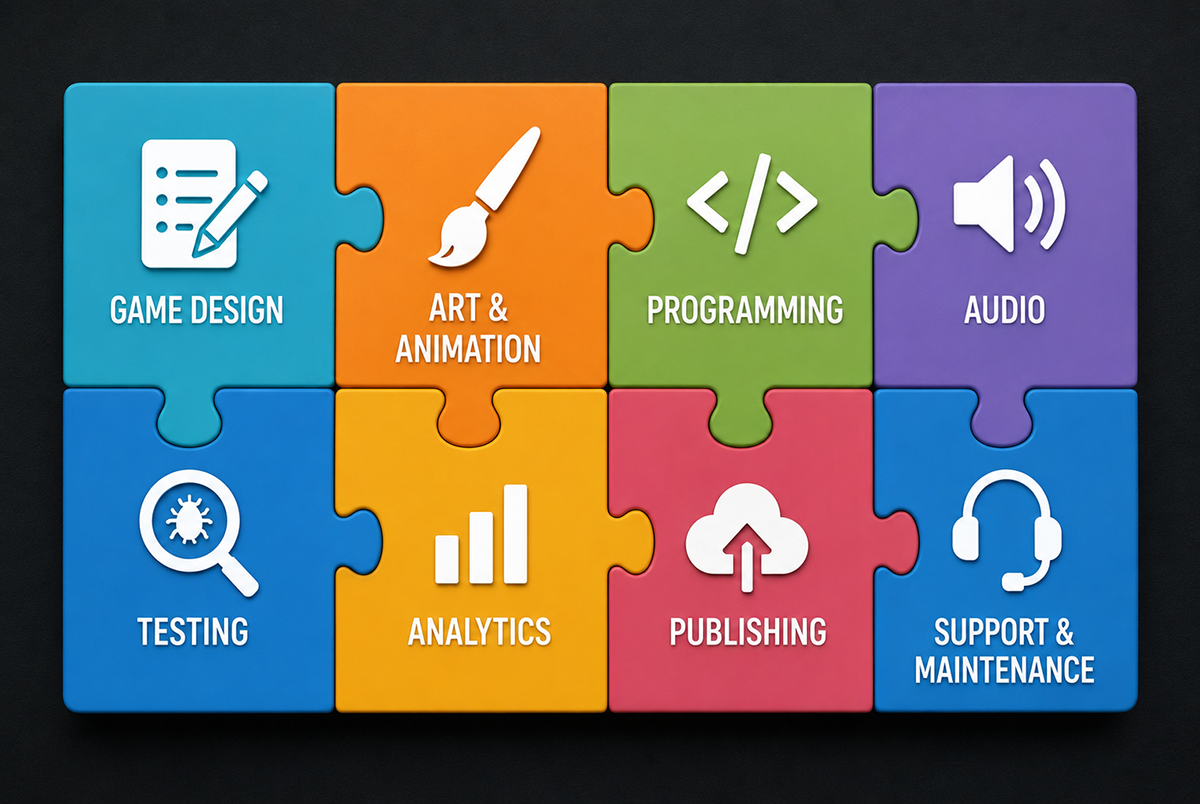
In reality, coding is only one part of creating a successful game.
A complete project may include:
Some studios include these services in their quote.
Others don't.
That's why two prices can differ dramatically.
Over the last two decades we've developed a wide variety of interactive experiences.
For Scholastic Australia, we created a growing collection of educational games supporting classroom learning.
For Optus, we developed Speed Of Bolt, a promotional game designed to engage customers through branded gameplay.
We've also worked with organisations including Google, Disney, ABC Kids, Westpac, UNSW and many advertising agencies, each with completely different objectives.
Although every project involved game development, they required different levels of planning, artwork, testing and long-term support.
That's why there is no such thing as a "standard" game price.
After delivering more than 100 projects, we've found these five questions determine the scope, and ultimately the budget—better than any technical discussion.
Every answer leads to a different solution.
A game for preschool children has very different design requirements to one built for engineers, healthcare professionals or sports fans.
Understanding the audience shapes almost every development decision.
This is often the single biggest factor affecting cost.
A promotional game supporting a six-week marketing campaign is fundamentally different to an educational platform expected to grow over several years.
We've delivered both, and the planning involved is completely different.
Do you need:
Choosing the right platforms can significantly influence both development time and ongoing maintenance.
Many first-time clients ask for features they don't actually need.
Sometimes these features genuinely add value.
Sometimes they simply increase cost without improving the experience.
Our role is to help identify which features support your objectives, and which don't.
One advantage of delivering hundreds of projects is recognising the same patterns.
The most common mistakes include:
The most successful projects start with a clear objective and evolve over time.

At Mode Games, our success is directly linked to the success of our clients.
If your game doesn't engage players or achieve its objectives, then we've failed too.
That's why we don't simply build exactly what's written in a specification.
We ask questions.
We challenge ideas.
We recommend simpler solutions when they'll deliver a better outcome.
We've even advised clients against features they initially requested because we believed there was a more effective approach.
Those conversations have consistently led to stronger products and better long-term results.
We believe our role is not simply to develop software.
It's to become a trusted development partner invested in your success.
When comparing studios, ask yourself:
And also price matters.
But trust, experience and collaboration matter just as much.
After all, if a game fails to achieve its purpose, even the cheapest quote becomes an expensive investment.
If there's one lesson we've learned after more than 10 years of developing games, it's this:
Don't buy a game. Invest in an outcome with a reliable partner.
Whether your goal is increasing customer engagement, supporting education, promoting a product or training staff, the right development partner should focus on achieving those objectives, not simply delivering a list of features to reach milestones.
That's how successful games are created.
That's how long-term partnerships are built.
And that's how we approach every project at Mode Games.
Learn more about game development with experts.

Ready to discuss your project? Contact us today and let's find the right game development solution for your goals and budget.

All of our clients' games have a unique purpose and a story behind how we made them together. Find out how we ensured our customers' success.
We’d love to hear about your idea or project! Share as much detail as you can, and our team will get back to you to chat about what we can do for you.


Suite 705, 250 Pitt St. Sydney NSW Australia 2000


